

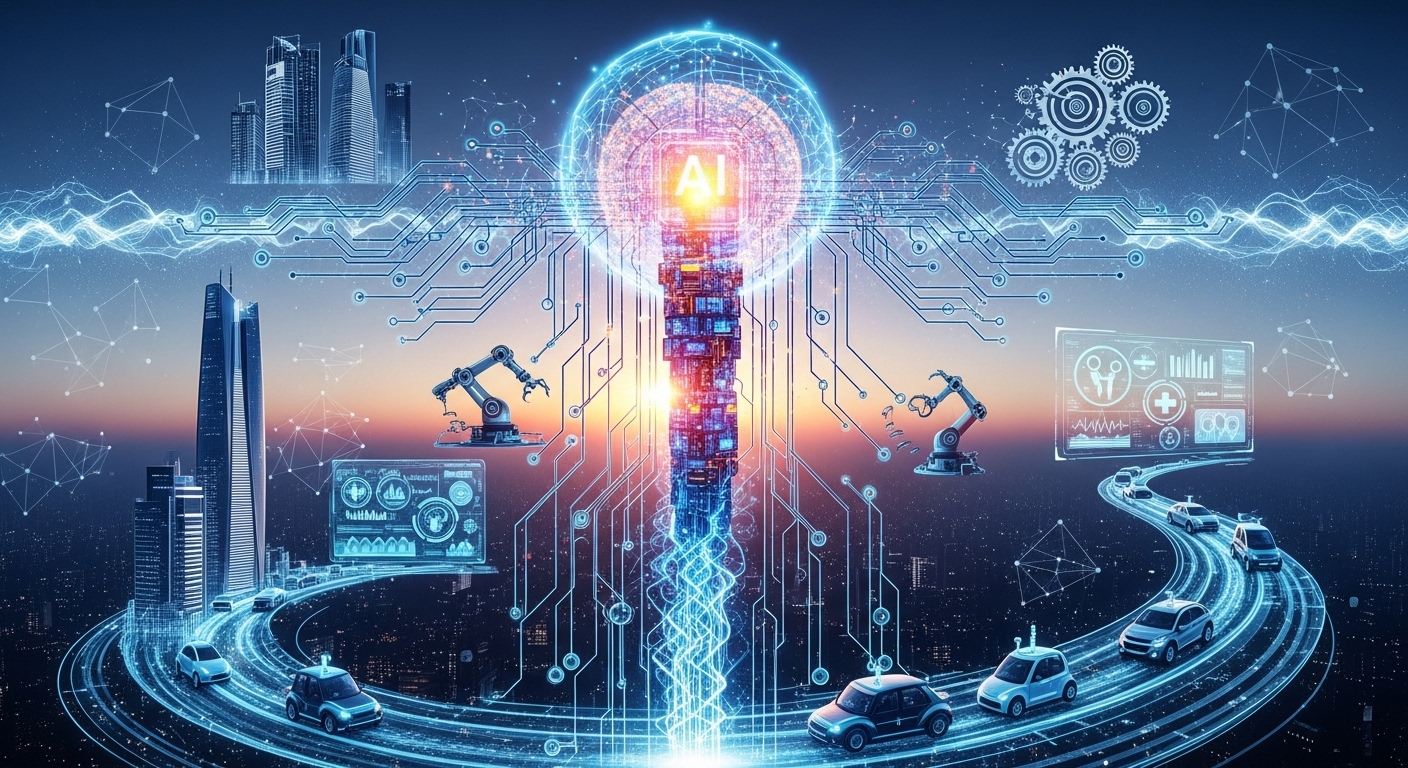
Artificial intelligence advances are becoming the primary force driving growth across the global technology industry, reshaping how companies build products, deliver services, and compete in international markets. From automation and data analytics to generative models and intelligent systems, AI is accelerating innovation and transforming the structure of the modern tech economy worldwide.
AI Driven Transformation in Tech Industry
Rapid Industry Wide Adoption
Technology companies are rapidly adopting artificial intelligence across software, hardware, and digital services. This widespread adoption is improving operational efficiency, reducing costs, and enabling faster product development cycles, allowing firms to remain competitive in a highly dynamic global market environment.
Automation of Core Processes
AI-powered automation is transforming core business processes such as coding, testing, customer support, and data management. By reducing manual workloads, companies are increasing productivity while allowing human workers to focus on higher-value creative and strategic tasks.
Product Innovation Acceleration
Artificial intelligence is significantly accelerating product innovation by enabling faster prototyping, real-time testing, and adaptive system design. This allows tech companies to launch smarter, more efficient digital products that respond better to user needs and market demands.
Intelligent System Integration
AI systems are being integrated into everyday technologies such as smartphones, cloud platforms, and enterprise software. These intelligent systems enhance performance, improve user experience, and provide predictive capabilities that support decision-making across industries.
Data Driven Development Growth
The tech industry is increasingly relying on AI-powered data analysis to guide development strategies. Large datasets are processed to identify patterns, optimize performance, and improve product design, leading to more efficient and targeted technological solutions.
Machine Learning Expansion Across Industries
Advanced Algorithm Development
Machine learning algorithms are becoming more sophisticated, enabling systems to learn from data and improve automatically over time. These advancements are powering applications in search engines, recommendation systems, and fraud detection technologies.
Predictive Analytics Growth
Predictive analytics is helping businesses forecast trends, user behavior, and market movements. This capability allows companies to make proactive decisions, reduce risks, and improve strategic planning across multiple sectors.
Pattern Recognition Improvements
AI systems are enhancing pattern recognition in images, speech, and text. This improvement is driving progress in fields such as healthcare diagnostics, security systems, and natural language processing applications.
Real Time Decision Systems
Machine learning models are enabling real-time decision-making in industries such as finance, logistics, and cybersecurity. These systems respond instantly to changing conditions, improving efficiency and accuracy.
Adaptive Learning Models
Adaptive learning models continuously evolve based on new data inputs, allowing systems to remain accurate and relevant over time. This makes AI solutions more flexible and scalable across different applications.
Generative AI Revolution
Content Creation Automation
Generative AI is transforming content creation by producing text, images, videos, and code at scale. This reduces production time and enhances creativity across digital industries.
Software Development Assistance
AI-powered tools are assisting developers by generating code suggestions, debugging errors, and automating repetitive programming tasks, improving efficiency in software engineering.
Creative Industry Transformation
Creative sectors such as design, marketing, and entertainment are being reshaped by generative AI tools that enable rapid ideation and content production.
Personalized User Experiences
Generative AI enables highly personalized digital experiences by tailoring content, recommendations, and interfaces based on individual user preferences.
Business Communication Enhancement
Companies are using generative AI to improve communication through automated reports, chatbots, and intelligent customer interaction systems.
Cloud Computing and AI Infrastructure
Data Center Expansion
Tech companies are expanding data centers to support growing AI workloads. These facilities provide the computing power needed for training large-scale models.
High Performance Computing Growth
Demand for high-performance computing systems is increasing as AI applications require massive processing capabilities for complex tasks.
GPU Technology Advancement
Graphics processing units are essential for AI training and inference, driving major investments in semiconductor technology and chip innovation.
Scalable Cloud Platforms
Cloud platforms are offering scalable AI services that allow businesses to access advanced tools without building their own infrastructure.
Energy Efficiency Optimization
Companies are focusing on energy-efficient computing systems to reduce the environmental impact of large-scale AI operations.
Business and Economic Impact of AI
Revenue Model Transformation
AI is enabling new revenue models such as subscription-based services, AI-as-a-service platforms, and intelligent digital products.
Startup Ecosystem Growth
AI-focused startups are attracting significant investment, driving innovation and increasing competition in the global technology sector.
Corporate Valuation Increase
Companies leading in AI development are experiencing increased market valuations due to strong investor confidence in future growth potential.
Workforce Transformation
AI is reshaping the workforce by automating routine tasks while creating demand for specialized technical and analytical roles.
Global Market Competition
Artificial intelligence is intensifying competition among global tech giants as they race to develop more advanced and scalable solutions.
Ethical and Regulatory Challenges
Data Privacy Concerns
The use of large datasets in AI systems raises concerns about privacy, data protection, and user consent across digital platforms.
Algorithm Bias Issues
AI systems can reflect biases present in training data, leading to fairness and ethical challenges in decision-making processes.
Regulatory Framework Development
Governments are developing regulations to ensure safe, transparent, and responsible use of artificial intelligence technologies.
Security Vulnerability Risks
AI systems can be vulnerable to cyberattacks, requiring stronger security measures and monitoring systems.
Responsible AI Deployment
Tech companies are focusing on ethical AI development to ensure transparency, accountability, and safe deployment of intelligent systems.
Future of AI Driven Tech Growth
Autonomous System Expansion
Autonomous systems such as self-driving vehicles and intelligent robotics will become more advanced and widely adopted.
Human AI Collaboration
Future workplaces will rely on close collaboration between humans and AI systems to maximize productivity and innovation.
Fully Intelligent Platforms
Digital platforms will become fully intelligent, offering adaptive experiences and predictive capabilities for users.
Global Digital Acceleration
AI will continue accelerating global digital transformation across industries, economies, and societies.
Continuous Innovation Cycle
The tech industry will enter a continuous cycle of AI-driven innovation, ensuring long-term growth and technological evolution.
FAQs
Why is AI important for tech industry growth?
Because it improves efficiency, innovation, and automation across digital systems.
How is AI used in technology companies?
It is used for automation, analytics, product development, and customer experience.
What are generative AI tools?
They are systems that create content like text, images, and code automatically.
What challenges does AI create?
Privacy, bias, regulation, and cybersecurity are major challenges.
What is the future of AI in tech?
AI will become central to all technology systems and digital platforms.
Conclusion
Artificial intelligence advances are driving unprecedented growth in the global technology industry by transforming innovation, automation, and business models. As companies continue investing in AI, the sector is becoming more intelligent and competitive. Despite ethical and regulatory challenges, the long-term outlook remains highly positive, with AI set to define the future of global technological development and economic progress.